

What Should You Do When the Check Engine Light Comes On in Your GM Vehicle?
You know the feeling.
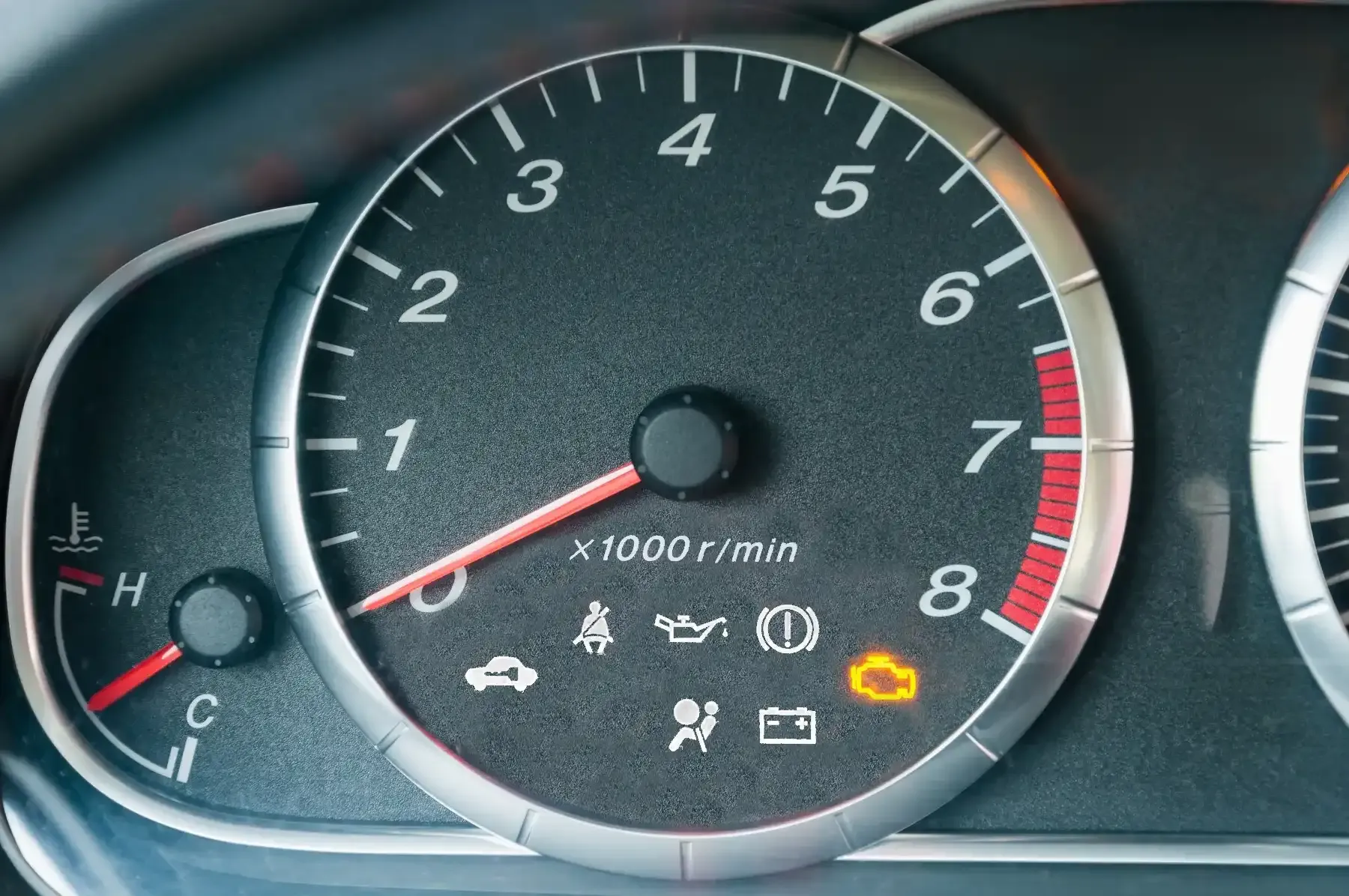
You're driving to work, heading out on a road trip, or maybe just making a quick run to the hardware store when suddenly that little amber engine-shaped icon appears on your dashboard.
The check engine light.
For many drivers, it's one of the most frustrating warning lights because it doesn't tell you exactly what's wrong. Unlike a low fuel light or tire pressure warning, the check engine light can mean a dozen different things. Sometimes it's something simple. Other times it's a warning that shouldn't be ignored.
The good news is that a check engine light doesn't automatically mean you're facing a major repair bill. In fact, some of the most common causes are relatively minor if caught early.
If your Chevrolet, GMC, Buick, or Cadillac has turned on its check engine light, here's what you should know before you panic.
Don't Ignore It
One of the biggest mistakes vehicle owners make is assuming the light will eventually go away on its own.
Sometimes it does.
That doesn't necessarily mean the problem fixed itself.
Modern GM vehicles are constantly monitoring engine performance, emissions systems, fuel delivery, ignition timing, and dozens of other operating conditions. When the vehicle detects something outside of normal parameters, it stores a diagnostic code and turns on the warning light.
Think of it as your vehicle raising its hand and saying, "Something isn't quite right."
The longer a problem goes unresolved, the more likely it is to create additional issues.
A simple sensor failure today could become a drivability issue tomorrow.
Is the Light Flashing or Staying Solid?
Before you do anything else, pay attention to how the light is behaving.
This detail can tell you a lot.
A Solid Check Engine Light
If the light is on but not flashing, the issue is often less urgent.
Your vehicle is telling you that something needs attention, but it may still be safe to drive for a short period while you arrange a diagnosis.
Common causes include:
- Loose gas cap
- Oxygen sensor issues
- EVAP system leaks
- Mass airflow sensor problems
- Minor fuel system concerns
- Aging spark plugs
You shouldn't ignore the issue, but you also don't need to assume the engine is about to fail.
A Flashing Check Engine Light
A flashing check engine light is a different story.
This usually indicates an active engine misfire.
When an engine misfires, fuel may enter the exhaust system without being properly burned. Over time, this can damage the catalytic converter, which is one of the more expensive emissions components on your vehicle.
If the light is flashing:
- Reduce your speed
- Avoid hard acceleration
- Stop towing if possible
- Have the vehicle inspected as soon as possible
If the engine is running rough enough that the vehicle shakes noticeably, it's often best to avoid driving it until the issue is diagnosed.
Check the Simplest Thing First
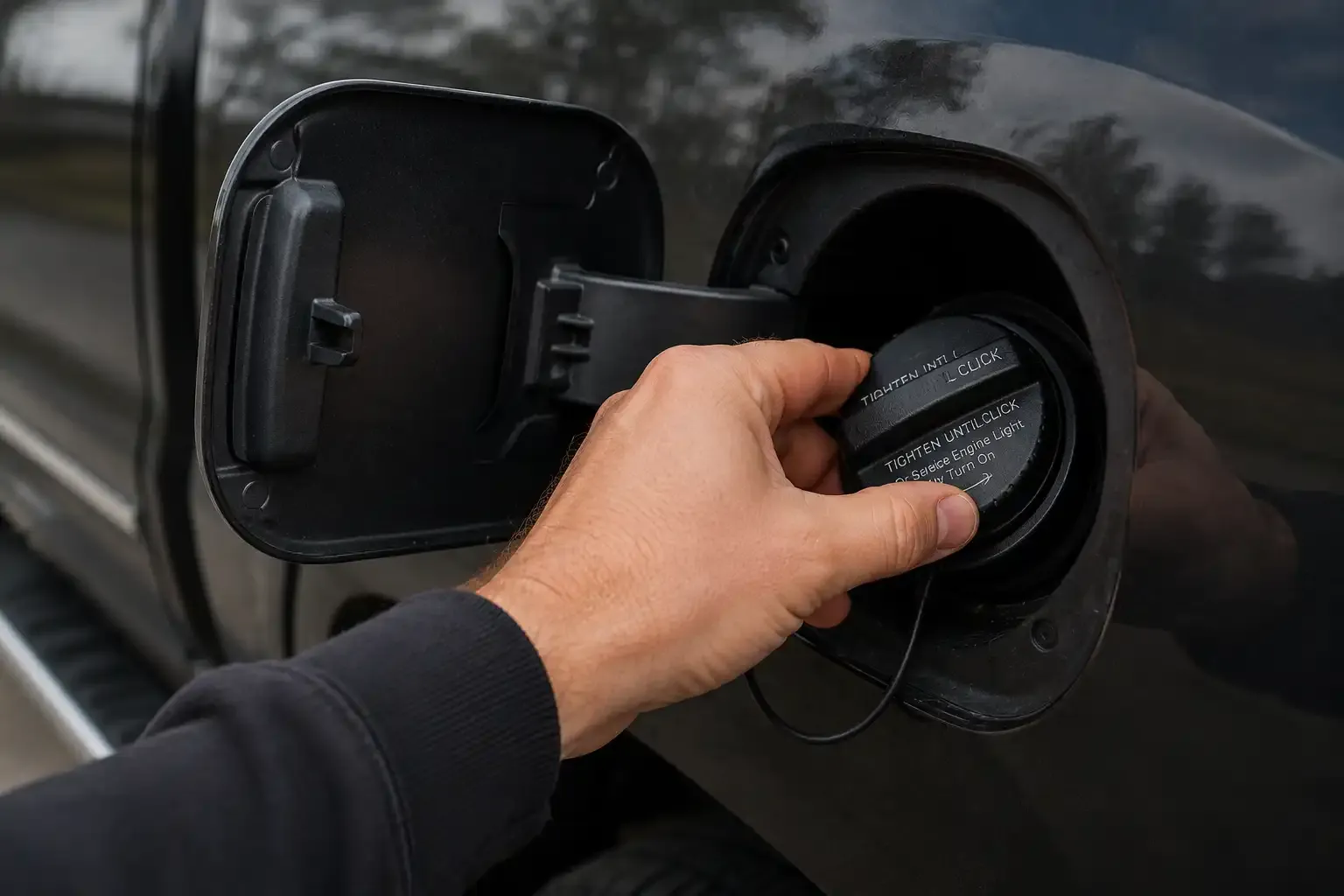
Before assuming the worst, take a look at your gas cap.
Seriously.
A surprising number of check engine lights are triggered by a loose, damaged, or improperly installed gas cap.
Your fuel system is sealed to prevent fuel vapours from escaping into the atmosphere. If the gas cap isn't sealing properly, the vehicle may detect a leak and trigger the warning light.
It only takes a few seconds to check.
Remove the cap, inspect the seal, and reinstall it until it clicks securely into place.
It may take a few driving cycles for the light to clear, but it's always worth ruling out the easiest possibility first.
Common Reasons a GM Check Engine Light Comes On
There are hundreds of possible diagnostic codes, but a handful of issues account for a large percentage of check engine light complaints.
Worn Spark Plugs
Spark plugs don't last forever.
As they wear, they become less efficient at igniting the fuel-air mixture inside the engine.
You might notice:
- Rough idle
- Hard starts
- Reduced fuel economy
- Hesitation during acceleration
Many drivers don't notice gradual performance loss until the check engine light finally comes on.
Failing Ignition Coils
Ignition coils work alongside spark plugs to generate the spark needed for combustion.
When a coil starts failing, symptoms often appear suddenly.
The vehicle may:
- Shake at idle
- Misfire under load
- Feel sluggish
- Trigger a flashing check engine light
Ignition-related problems are among the most common causes of misfire codes in GM vehicles.
Oxygen Sensor Problems
Most drivers have never seen an oxygen sensor, but these small components play a huge role in fuel efficiency.
They monitor oxygen levels in the exhaust and help the engine computer adjust fuel delivery.
When they fail, your vehicle may still run, but it often becomes less efficient.
You might notice:
- More trips to the gas station
- Rough performance
- Increased emissions
The longer a faulty oxygen sensor is left unresolved, the more likely it becomes that other emissions components are affected.
Mass Airflow Sensor Issues
Your engine needs the correct amount of fuel and air to run properly.
The mass airflow sensor measures incoming air and helps determine how much fuel should be delivered.
When it starts sending inaccurate information, the engine can become confused.
Common symptoms include:
- Rough idle
- Hesitation
- Stalling
- Poor fuel economy
Sometimes the sensor can simply be dirty. Other times replacement is required.
EVAP System Leaks
The EVAP system is designed to capture fuel vapours before they escape into the atmosphere.
A leak anywhere in the system can trigger a check engine light.
This doesn't usually affect how the vehicle drives, which is why many drivers are surprised when the warning appears.
The issue may be as simple as a loose gas cap or as complex as a failed purge valve or cracked hose.
Fuel Injector Problems
Fuel injectors deliver fuel directly into the engine.
When they become clogged or begin to fail, performance often suffers.
Symptoms can include:
- Rough running
- Engine hesitation
- Poor fuel economy
- Misfires
Like many vehicle problems, fuel injector issues are typically easier and less expensive to address when caught early.
Pay Attention to Other Symptoms
The check engine light is only one piece of the puzzle.
Pay attention to how your vehicle is behaving.
Ask yourself:
- Is it harder to start?
- Is fuel economy getting worse?
- Does the engine feel rough?
- Is acceleration slower than normal?
- Do you smell fuel?
- Is there unusual smoke from the exhaust?
These clues can often point technicians in the right direction and help speed up the diagnostic process.

When Should You Stop Driving?
Most solid check engine lights allow you enough time to schedule service. However, there are situations where continuing to drive isn't a good idea.
Seek immediate attention if:
- The light is flashing
- The vehicle shakes excessively
- Engine temperature rises
- You notice smoke
- Power drops dramatically
- The vehicle stalls repeatedly
Trust your instincts.
If the vehicle suddenly feels unsafe or significantly different than normal, it's worth getting it looked at sooner rather than later.
The Value of Using Genuine GM Parts
Once you've identified the problem, using the right replacement parts matters.
Today's GM vehicles rely on a complex network of sensors, computers, and modules that all need to work together properly.
That's one reason many owners prefer genuine GM parts.
OEM components are designed specifically for your Chevrolet, GMC, Buick, or Cadillac and are built to meet the same standards as the original equipment installed at the factory.
Whether you're replacing spark plugs, ignition coils, oxygen sensors, fuel injectors, or other engine-related components, choosing quality parts can help eliminate guesswork and ensure a proper fit.
Final Thoughts
A check engine light isn't something to fear, but it is something to respect.
Sometimes the solution is as simple as tightening a gas cap. Other times it's an early warning sign that could save you from a much larger repair down the road.
The key is acting sooner rather than later.
When your GM vehicle tells you something isn't right, listening now is usually much cheaper than waiting until the problem becomes impossible to ignore.
And when the time comes for replacement parts, using genuine GM components can help keep your vehicle performing the way it was designed to.